APPS
Unlocking climate data from Earth’s last frontiers
What if some of the most important climate data on Earth simply did not exist yet?
As of 2026, there are still regions across Antarctica and Greenland where no continuous environmental data has ever been captured. Not outdated data. No data.
The CORE Polar Initiative was created to help change that.
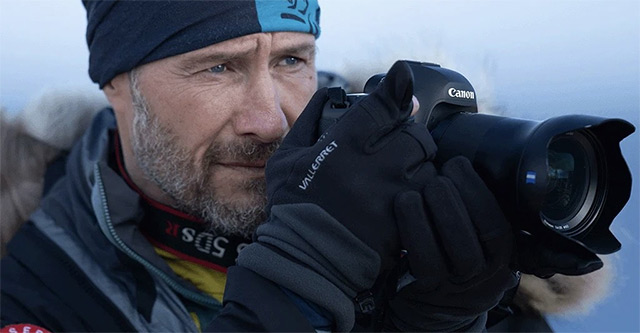
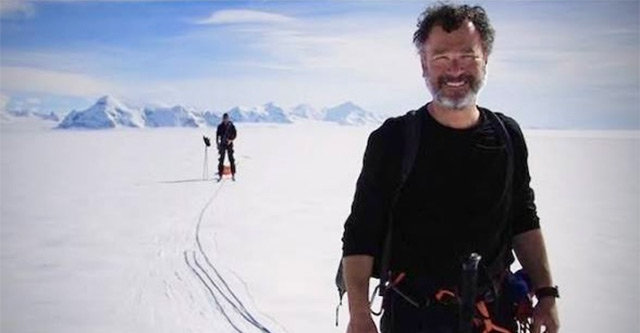
In collaboration with polar explorer Sebastian Copeland and leading climate scientist Ted Scambose, and integrated with NASA’s Landsat and MODIS program, we are capturing real-time environmental data, and super high resolution mapping of climate and meteorology, from the most remote and unmeasured regions on Earth.
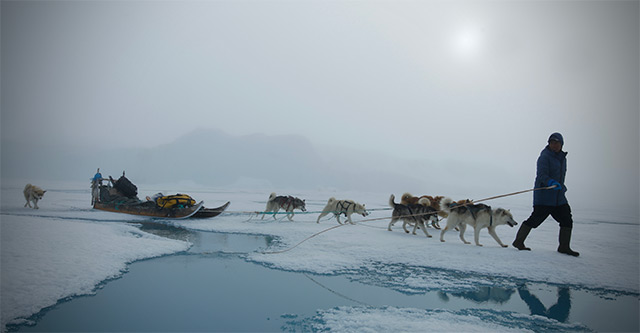
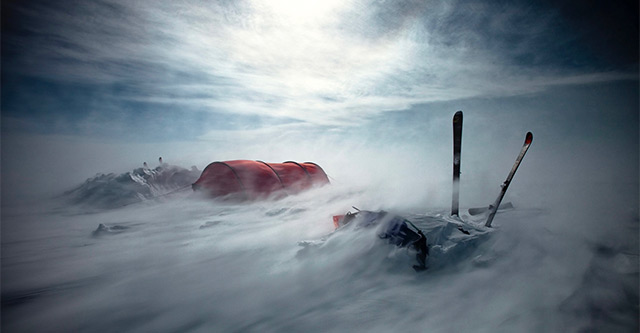
This includes a full traverse to the Pole of Inaccessibility in Antarctica, the most remote point on the planet, and a 3,000 kilometer crossing of Greenland from South to North.
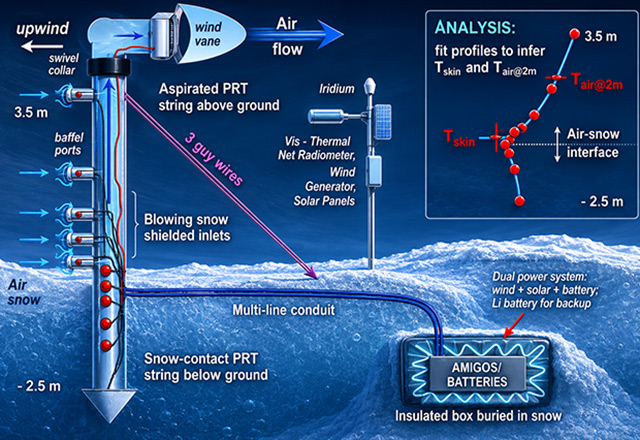
We are deploying AWS’ (autonomous weather stations) with NASA-level sensors to capture Cryosphere Dynamics, Ice Mass Balances, Thermo Haline Circulations, Inversion Layers, Surface Air Temperature Gradients, and Isostatic Rebounds. Basically continuous temperature, wind, and ice data over a 24-month period, data that does not currently exist.


And this matters because what happens in these regions does not stay there.
These polar systems regulate global climate patterns. They influence ocean circulation. They affect sea level rise. They shape weather systems across continents.
Without accurate data from these extremes, our global models are incomplete.
What makes this initiative fundamentally different is not only that we are capturing this data, the CORE Polar Initiative helps build the foundational science infrastructure needed to understand it.
Through the latest environmental monitoring, cryosphere research, and atmospheric systems understanding, this initiative helps fill critical gaps, data that informs policy, science, and global decision-making for decades to come.
This has never been done in this way before.
And the timing could not be more critical.
The CORE Polar Initiative transforms Earth’s last frontiers into a living classroom for millions around the world.
Over 24 months, audiences on CORE will follow real-time discoveries from Antarctica and Greenland as scientists and explorers gather environmental data in some of the harshest conditions on Earth.
This is not retrospective learning. It is live exploration, live discovery, and live understanding as it unfolds.
CORE+ will turn those discoveries into accessible educational experiences for viewers of all ages. Complex science becomes visual, human, and understandable.
The initiative will continue evolving long after the expeditions end, creating a growing archive of knowledge for future generations.
Sebastian Copeland will document the expeditions every step of the way across some of the planet’s most remote and unforgiving environments.
Through documentaries, expedition films, short-form storytelling, and live visual updates, audiences will witness both the science and the human experience behind the journey.
Through CORE+, expedition discoveries and environmental data will be translated into educational experiences designed for classrooms, families, students, and curious minds worldwide.
Using AI-powered learning tools, multilingual educational journeys, and interactive experiences, complex science becomes visual, understandable, and globally accessible on CORE and shared with conservation partnerships and student networks globally.
a geological survey and record of the Earth’s land surface from satellite.
the geological reaction to the crushing weight of large ice mass, were it to disappear. The geology would rise as reaction to being release of that enormous mass. Mean ground elevation would rise.
Automated Weather Stations. Those record, store and communicate weather related data via satellite.
the rate of change in temperature over distance at or near ground level.
contrary to the traditional notion of air getting cooler as it rises, an inversion is an atmospheric condition where a layer of warm air sits over a layer of cold air near the ground, as is typically the case in Antarctica.
Moderate Resolution Imaging Spectroradiometer. Like Landsat, a NASA instrument which captures super high resolution enabling mapping of climate and meteorology.
the relation of salinity to temperature of an ocean current. Salt has more mass than fresh water; cold water is denser than its warmer counterpart. When ice melts into the ocean, it affects that relationship and the conveyer belt that balances current climate conditions around the world. In the Atlantic is it called the Atlantic Meridional Overturning Circulation (AMOC). It distributes warm water to the northern hemisphere, tampering its proximity to the Arctic, while around the equator, it drives cold water which reduces the incidence of storms in both intensity and instances.
The net balance between the loss and gain of ice on an ice sheet.
the behavior of our planet’s frozen water elements across snow, ice, ice sheets glaciers and even permafrost.